









Double Doors
Wondering if double doors are right for your home? Discover the pros and cons of double front doors based on 20+ years of installation experience.
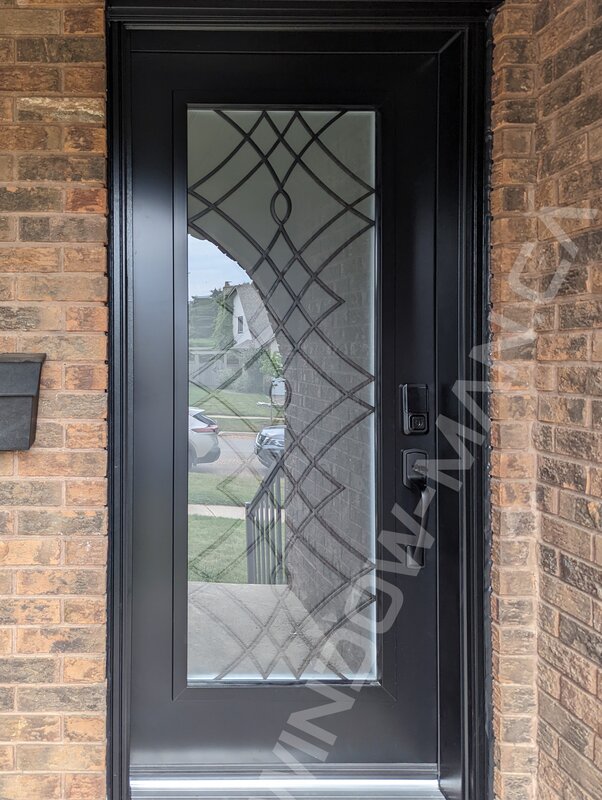
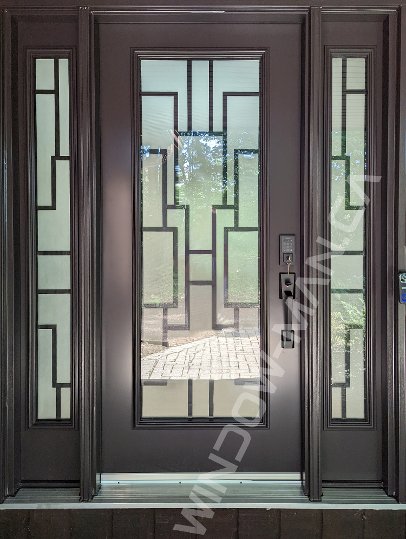
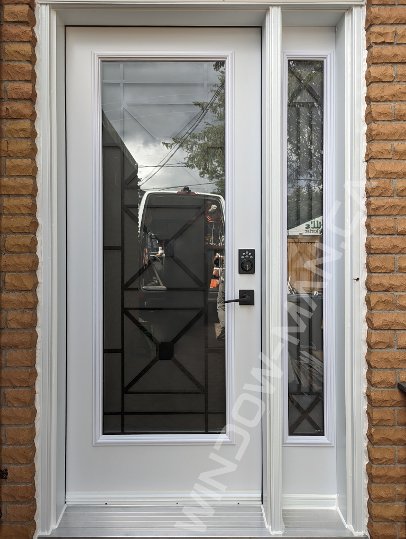
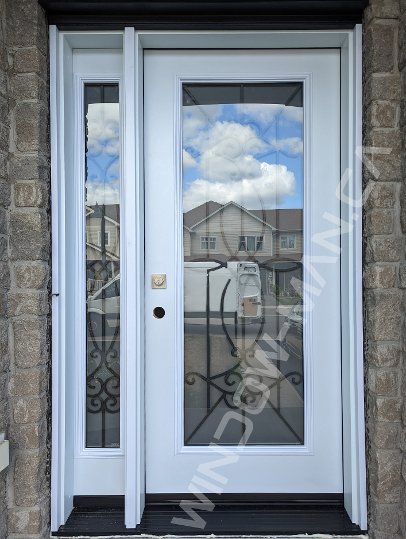
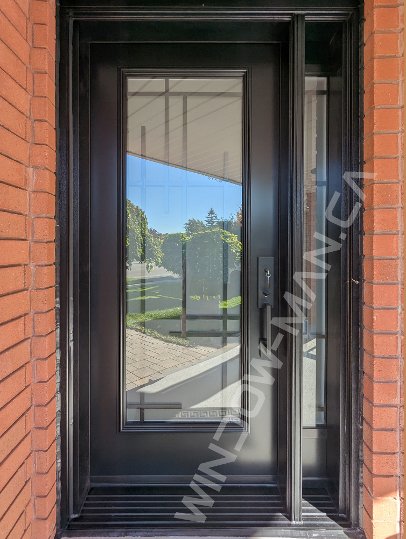
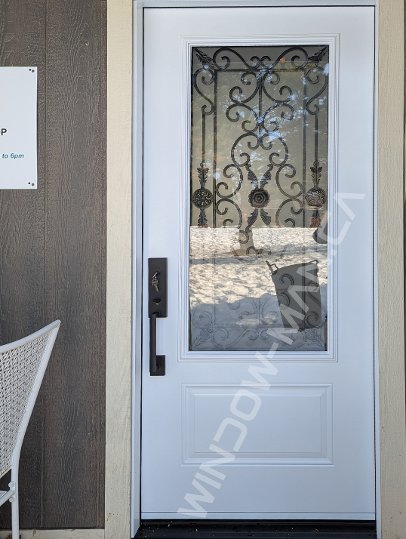
Wrought iron doors add detail without needing a complicated door slab. The ironwork sits inside the glass and becomes the main feature of the entrance.
In this collection, you’ll find exterior steel and fiberglass doors with wrought iron glass inserts. Some designs are traditional and detailed. Others use straighter lines and simpler patterns that work well on newer homes.
Browse all exterior doors.


| WIDTH | HEIGHT | |
|---|---|---|
| 31,5 | 82,375 | MIN |
| 37,5 | 82,375 | MAX |

Wrought iron works especially well on exterior doors because it adds depth to the glass without relying on color or heavy paneling.
The main advantages are:
Our preference is usually to let the wrought iron be the main decorative element. If the glass already has a strong pattern, the door itself does not need much more.
A front door with wrought iron and glass combines natural light with a more decorative look.
The glass can be clear, textured, frosted, or patterned around the ironwork. That gives you some control over how open or private the entrance feels.
Common layouts include:
The right amount of glass depends on the house and how exposed the entrance is from the street.
Wrought iron door inserts are decorative glass units with ironwork built into the design.
The insert can use curved scrollwork, geometric lines, traditional patterns, or simpler modern shapes. The glass around the iron can also change the look quite a bit.
You’ll usually see:
A good insert should feel like it belongs with the door, not like something added afterward.
A single wrought iron door works well when you want the entrance to have more presence without making the whole opening larger.
For a standard single front door, I would usually keep the proportions simple. One strong glass insert is often enough.
A single wrought iron door can also be combined with:
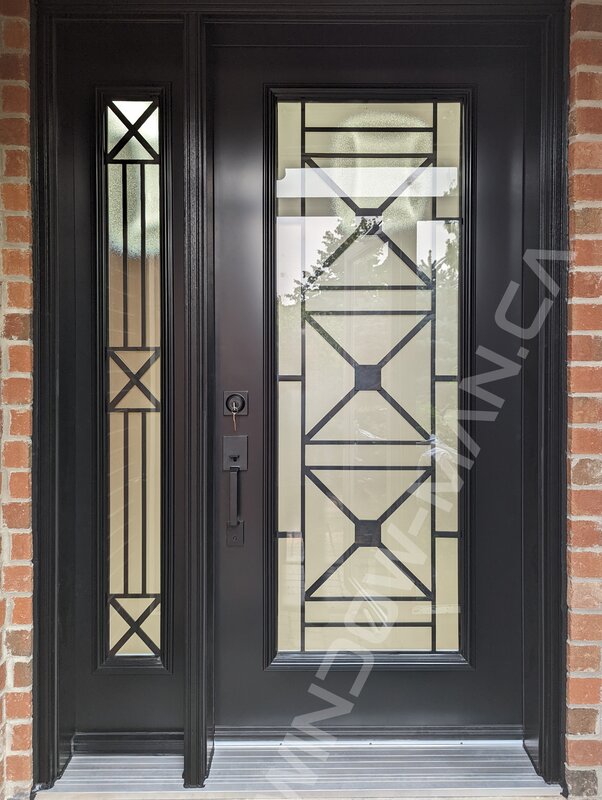
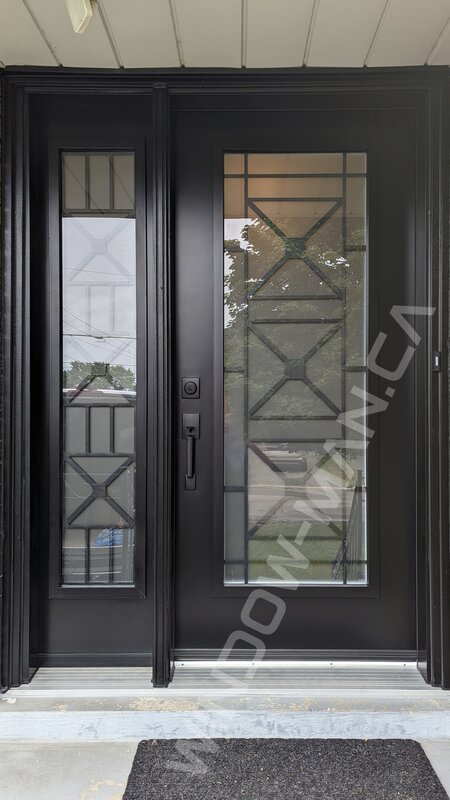
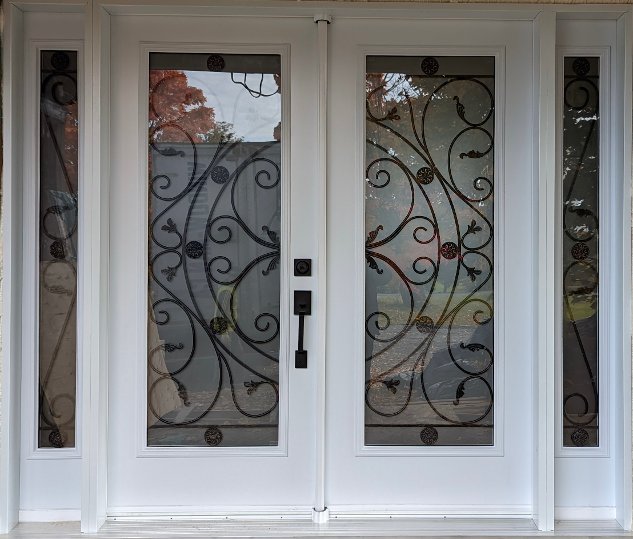
A single wrought iron door with sidelights can look just as substantial as a double door if the proportions are right.
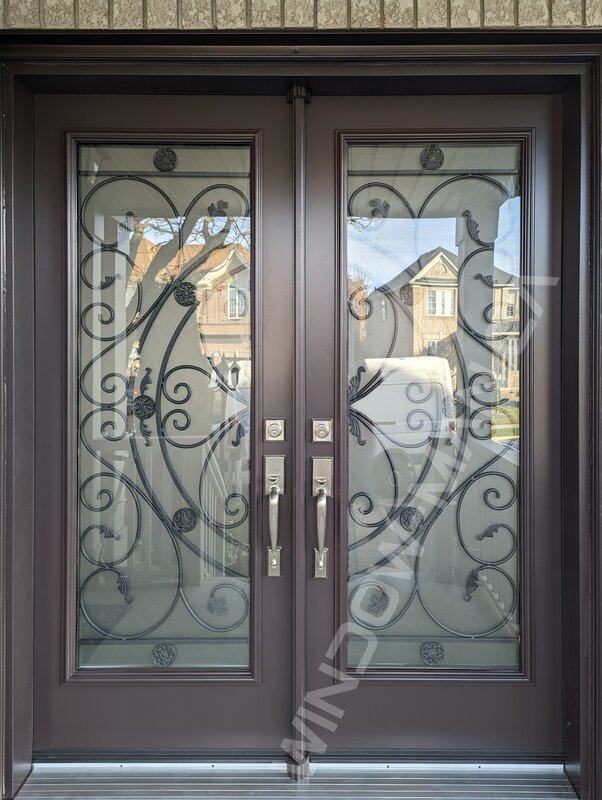
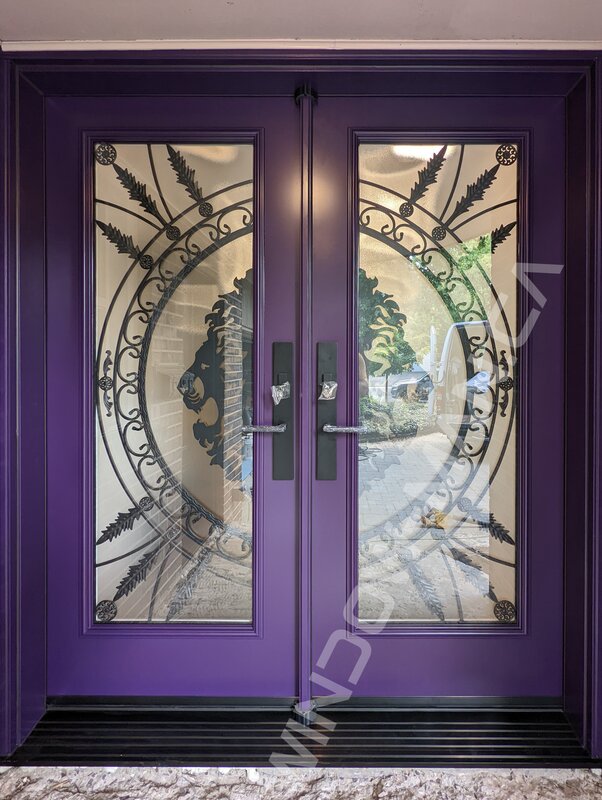
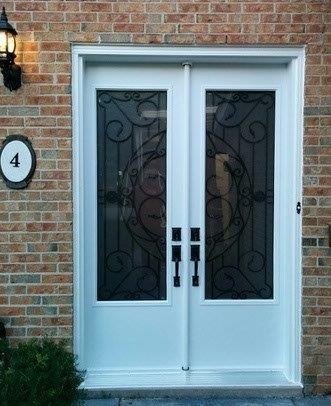
Double front doors with wrought iron work especially well on wider entrances where plain glass can start to feel empty.
The iron pattern helps break up the glass and gives both doors a stronger visual connection.
For double doors, symmetry matters more than usual. The two glass inserts should look balanced when the doors are closed, especially if the design includes curved or mirrored ironwork.
Double entry doors with wrought iron can also be paired with sidelights or a transom, but I would be careful not to make every part of the entrance decorative.
Sometimes the doors should be the feature and everything around them should stay simpler.
Wrought iron does not have to look traditional.
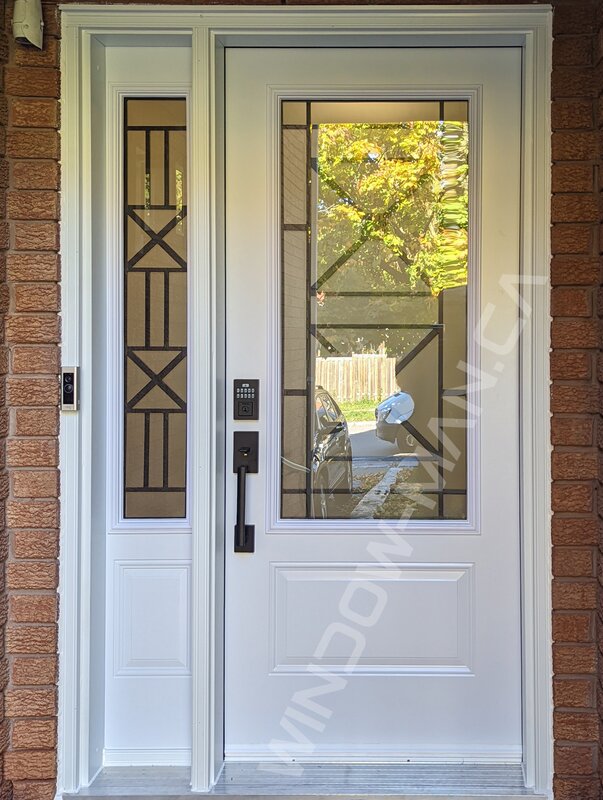
Modern wrought iron doors usually use cleaner patterns, straighter lines, and less decorative scrollwork. The glass itself may also be clearer and simpler.
For a more modern look, I would usually choose:
A modern wrought iron front door works best when the iron adds structure rather than decoration for decoration’s sake.
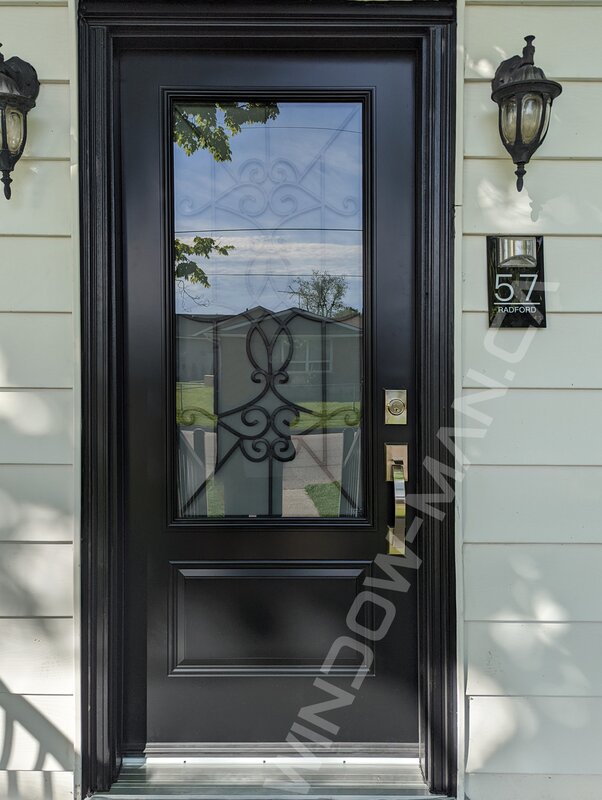
Black wrought iron doors are the obvious combination because the ironwork naturally ties into a darker door color.
Black works particularly well with:
But the door itself does not need to be black.
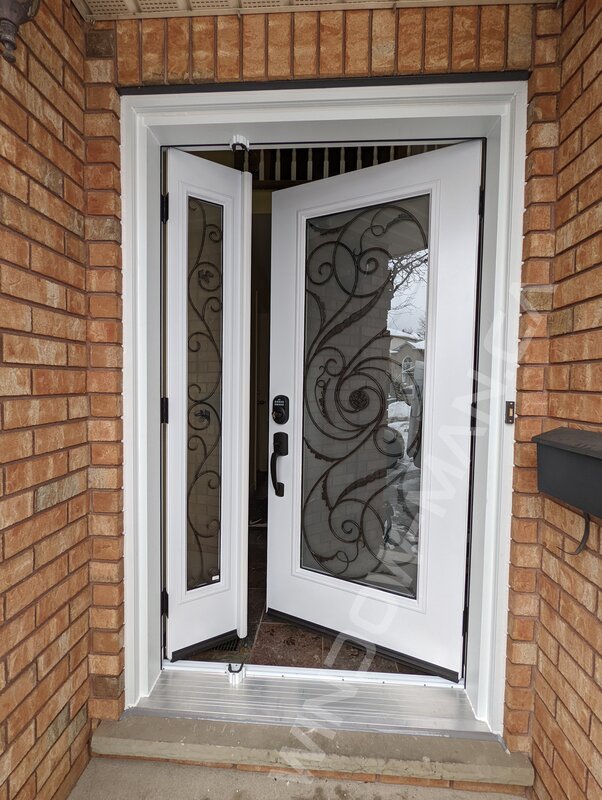
White wrought iron doors can look very clean, especially on traditional homes. The contrast between a white slab and dark ironwork makes the glass stand out without making the whole entrance feel heavy.
For most homes, I would choose the door color based on the exterior first, then let the wrought iron work with it.
Wrought iron can continue beyond the door itself.
On larger entrances, matching or coordinating glass can be used in:
The glass does not always need to match exactly.
Sometimes using the main wrought iron pattern in the door and a simpler version in the sidelights gives a cleaner result. If every piece has the same heavy pattern, the entrance can become busy very quickly.
Wrought iron entry doors can be made with both steel and fiberglass slabs.
Steel is a practical choice when you want a painted finish, crisp lines, and a solid exterior door.
Fiberglass gives you more flexibility with texture and wood-look finishes, which can work particularly well with more traditional wrought iron designs.
For Canadian homes, the important part is not only the appearance. The slab, insulated glass, frame, weatherstripping, hardware, and installation all need to perform properly through winter and summer.
The wrought iron is the design feature. The rest of the door still has to do the everyday work.
Replacing an older front door with a wrought iron door does not always mean changing the opening.
If the existing size and configuration work, you can often keep the same general layout and update:
For replacement projects, a photo of the existing entrance and approximate dimensions are usually enough to start narrowing down the options.
If you already have decorative glass, it is also worth deciding whether you want the new door to stay traditional or move toward a cleaner modern wrought iron design.
Start with the house, not the most detailed glass insert in the catalog.
If the exterior already has a lot happening — brick patterns, stone, decorative trim, columns — a simpler wrought iron design will usually look better.
If the house is fairly plain, the front door can handle a stronger pattern.
Then think about privacy, glass size, and how much light you actually want.
A good wrought iron door should add something to the entrance without taking over the whole front of the house.
Wrought iron doors are exterior entry doors that use decorative wrought iron inside or around the glass insert. The door slab itself can be steel or fiberglass, while the ironwork becomes the main decorative feature.
Window Replacement Cost
By using the calculator, you'll get a clear estimate of your window replacement cost, making it easier to plan your budget and timeline.

Blog
See all blog
Wondering if double doors are right for your home? Discover the pros and cons of double front doors based on 20+ years of installation experience.

Not sure what a double door astragal is? It's the strip that seals the gap between your doors. Learn how it works, why it matters, and what to upgrade.
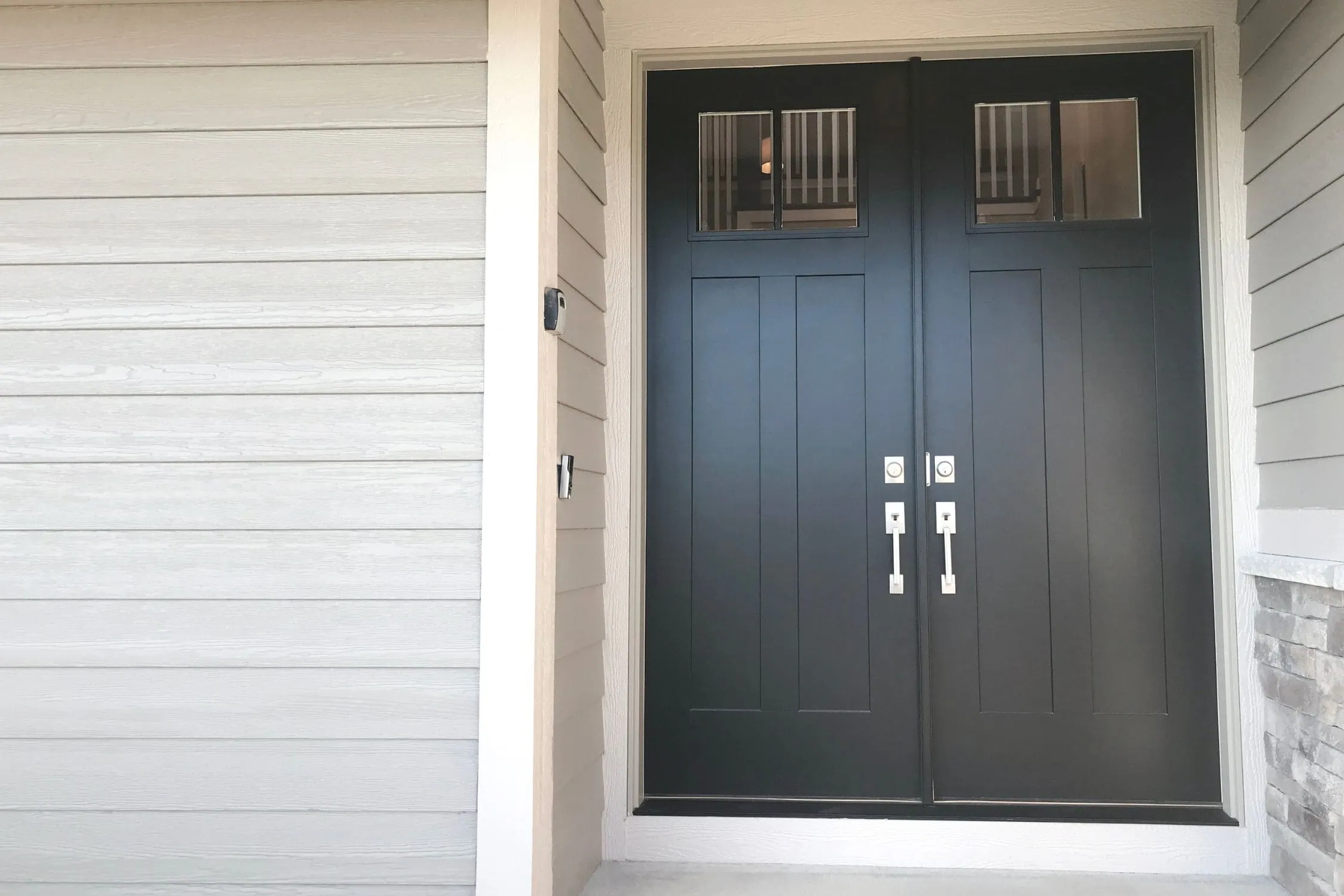
Discover the top trending double door designs of 2026 — from bold pulls to smart locks. Real-world picks that look great and actually work.


If I could give six stars to Andrew, I would. I found his ad on Kijiji and he came for an estimation. He was prompt and professional. The door exceeded my expectations. It was installed in just one day. Instead of 6 weeks, it took short three weeks to make our custom order. Very happy with the result. Highly recommend!
Andrew and his crew were very courteous, polite , efficient and their workmanship is outstanding. Great eye for detail. Very happy with our new door. A Big Thank you to all.
A fabulous, professional, installation. Wonderful people completed the job on time. Can't wait to get 2 more Windows replaced!
We changed 2 doors : entry door and the glass on the second floor. Thank you Andrew and his team for high quality and fast job. I'd recommend everyone to use Andrew's service. Thank you so much!
I am really happy with my door installation by Andrew. This is my second time using Window Man and as usual a quality job, quality materials and competitive pricing.
We have a custom door installed. it looks and fits exceptionally. I am very happy with everything. Very fast work and amazing quality!
Andrew installed the entry door for my house. Excellent quality job. I am very happy with my new door.Highly recommend him.
Quick and simple process, from order to installation. We love our new doors. Delivery was earlier than expected. Andrew thank you for the great service.
Thank you Andrew. Excellent job at competitive prices! I love it!


— Anastasia