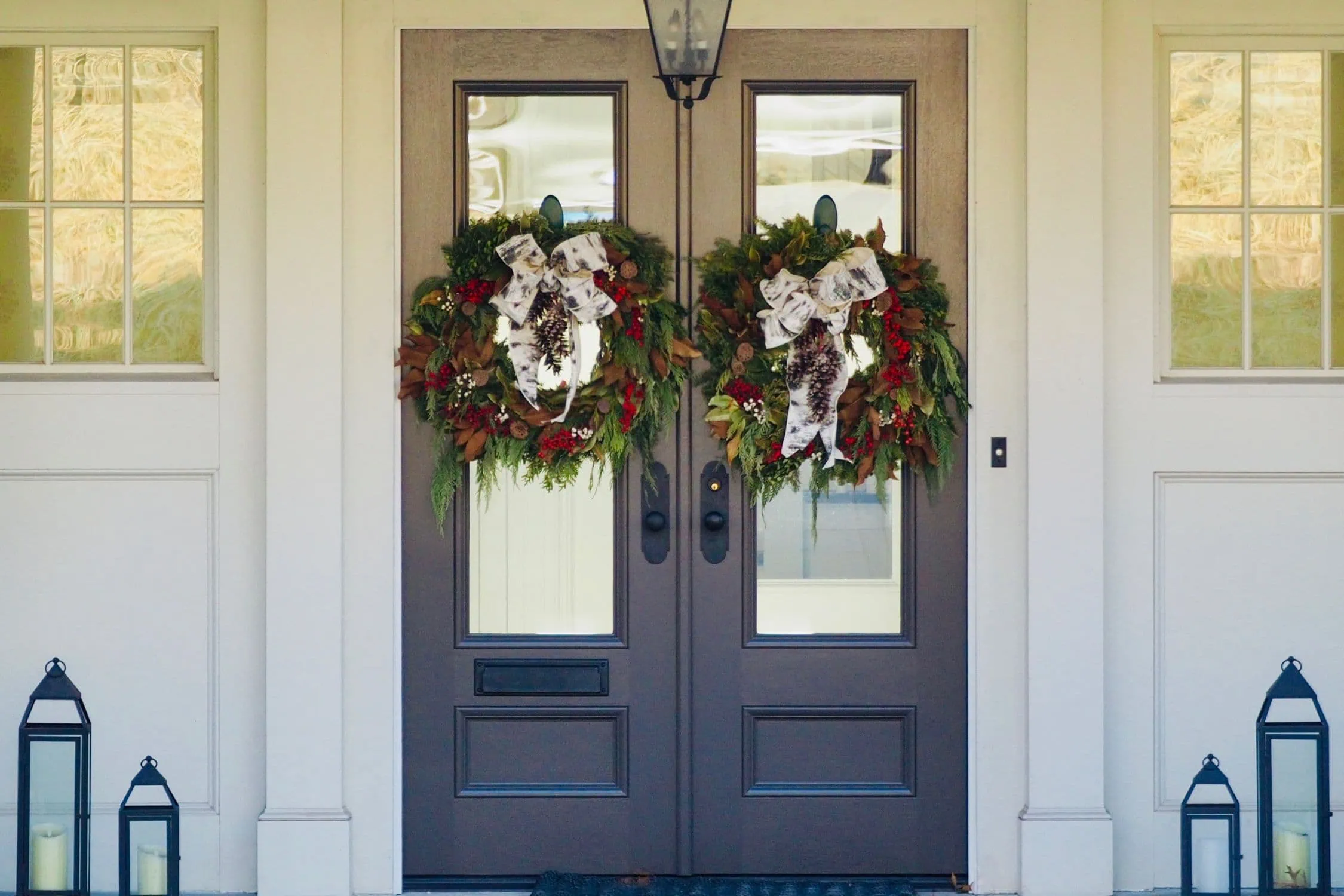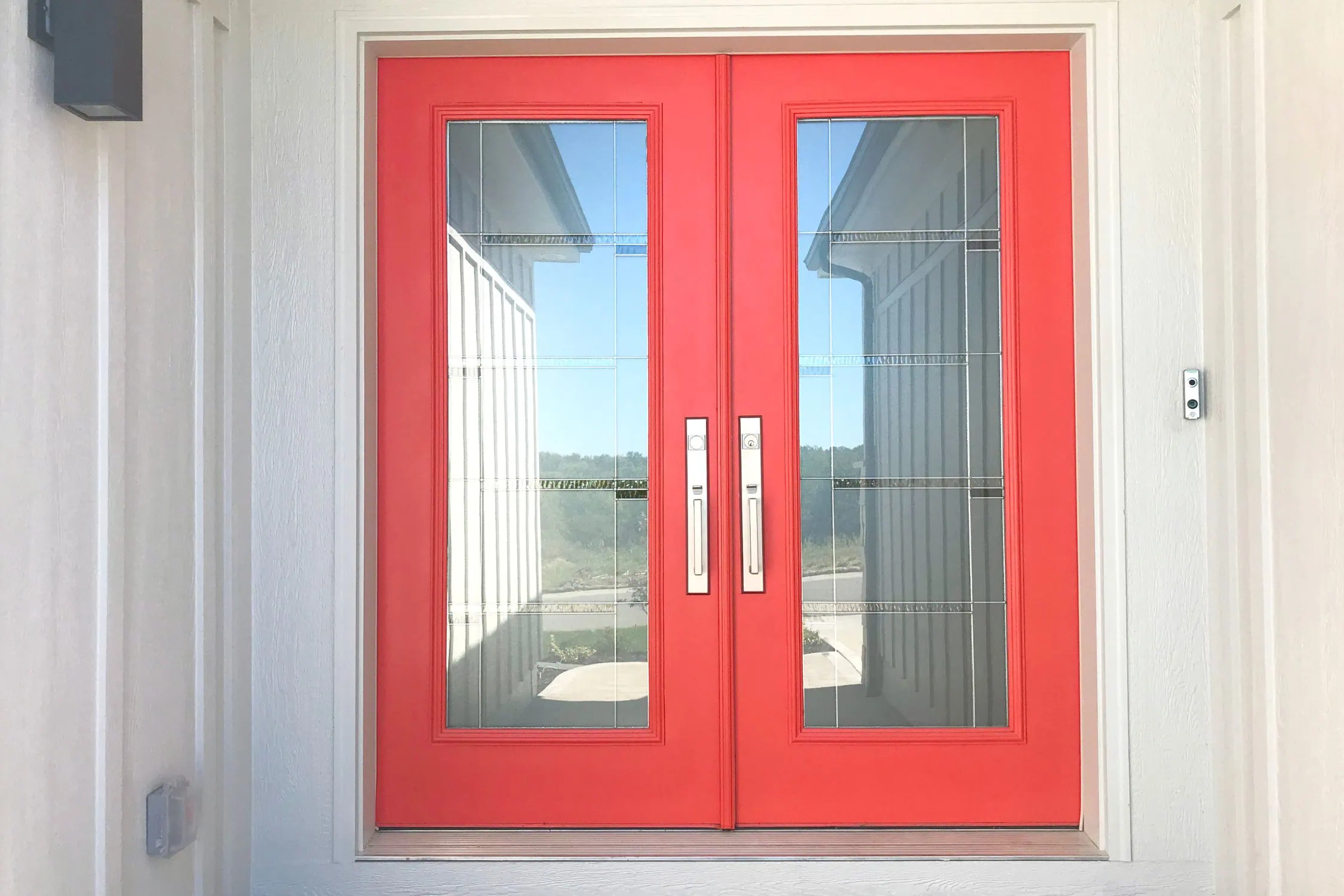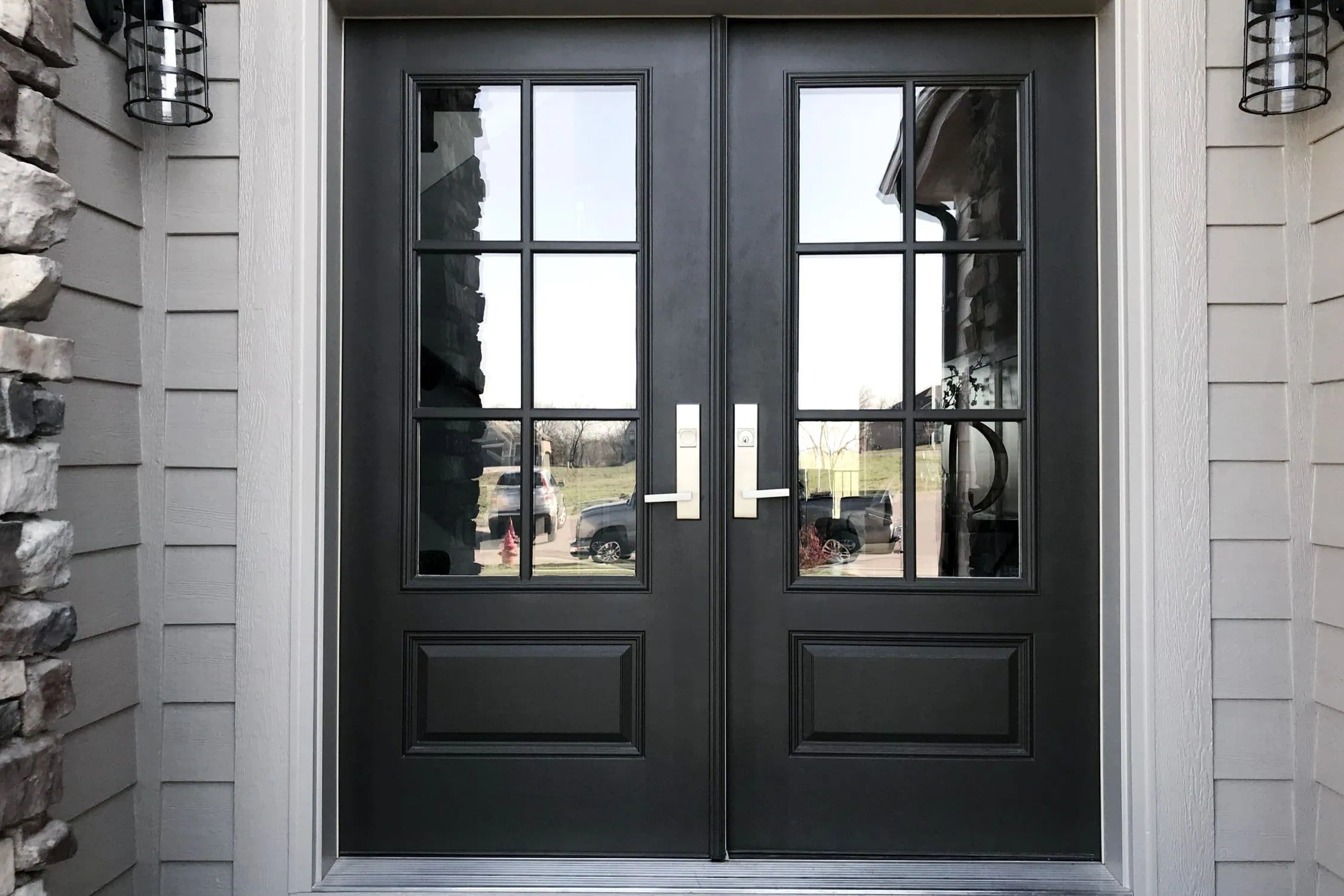


Adding windows to your double front doors is a chance to bring light, symmetry, and some visual breathing room to your entry. But only if you do it right. I’ve seen too many doors that looked good in a catalog, but awkward and out of place once installed.
Done well, sidelights and transoms can elevate a plain entry into something that feels custom — brighter, balanced, and better from the street.
Key Takeaways
- Sidelights can be box, panel, or frame-to-frame — each one changes the look and feel.
- Match door and window frame lines, glass styles, and finishes.
- Acid-etched, stained, or wrought iron glass gives privacy and style.
- Avoid clutter: one strong glass feature beats three weak ones.
- Always measure rough openings carefully — especially with sidelights.
What Are Sidelights and Transoms?
Sidelights are narrow glass windows beside your doors — fixed in place, and often used to pull in light or stretch the perceived width of the entry.
Transoms are horizontal windows above the doors, often used to add height or balance taller facades.
Sidelight Styles to Know
|
Style |
Description |
Notes |
|
Box Sidelight |
Framed separately with its own trim |
Clean, traditional look |
|
Panel Sidelight |
Built into the door panel |
Feels more modern, usually slimmer |
|
Frame-to-Frame |
Glass runs from bottom to top, edge to edge |
Bold, minimal, and contemporary |
Frame-to-frame sidelights look great if you have the right modern house for them — but they need precise framing and well-insulated glass to avoid cold spots.
If you're still exploring layout options beyond sidelights and transoms, check out our full guide to double door types and design ideas — it covers styles, materials, and setups that work in real homes.
Design Rules for Pairing Doors with Windows
Matching doors and windows is mostly about proportion and alignment. These are my go-to rules:
|
Rule |
Why It Matters |
|
Keep symmetry |
Uneven sidelights will bug you forever — center your door and balance the layout. |
|
Avoid over-designing |
Stick to one statement: a transom or sidelights, not both with busy glass. |
|
Line up paneling |
Don’t mix horizontal door panels with vertical muntins in the glass. |
|
Match materials |
Don’t use fibreglass doors with aluminum-trimmed sidelights — keep finishes consistent. |
If your house has black windows, don’t forget to spec the same black frames for your transom and sidelights — I’ve seen too many installs ruined by a white sidelight on a blacked-out facade.
Let’s talk it through
Styles, colors, installation — I’ll help you get it right
Double Front Doors with Windows: Best Glass Types
When it comes to sidelights and transoms, the glass does most of the talking. Here's what works:
|
Glass Type |
Use Case |
Avoid If |
|
Clear Low-E |
Great for light and visibility |
Entry faces street or has no privacy |
|
Frosted |
Balanced privacy and light |
You want full visibility |
|
Stained Glass |
Traditional homes or design impact |
On ultra-modern builds |
|
Wrought Iron + Glass |
Adds texture and security |
May feel heavy on small entries |
|
Acid-Etched Border Glass |
Clean privacy with some detail |
Only works when centered perfectly |
|
Tinted |
West-facing or glare-prone entries |
Can make entry too dark in shaded spots |
Wrought iron glass works great when you want impact — just don’t combine it with heavy scroll hardware or busy trims, or it all starts to feel like a showroom.
Matching Examples That Work
These are combinations I’ve either installed myself or would use:
- Black flat-panel doors + frame-to-frame sidelights with frosted glass
→ Modern, minimal, and lets in just enough light. - White craftsman-style doors + box sidelights with acid-etched border glass
→ Clean and classic without going full traditional. - Wood-look fibreglass doors + stained glass sidelights in a matching tone
→ Warm, rich, and timeless on brick homes. - Double doors with offset panels + single sidelight in clear Low-E glass
→ Balances asymmetry and keeps the entry feeling open.
Most trending front door designs include at least some form of glass — the key is in the details.
Mistakes to Avoid
- Mismatched muntins or panel lines — looks busy and disjointed.
- Too much glass — hurts insulation, especially if you cheap out on glazing.
- No plan for framing — if your opening isn’t wide enough, sidelights will look crammed.
- Glass styles that fight — don’t mix frosted on one side with clear on the other.
- Odd top alignment — sidelights and transom should sit flush with the top of your door.
On retrofits, I often cap the old sidelights in black aluminum instead of ripping them out. It saves thousands — and you’d never tell from the curb.
Double Front Doors with Windows: Match Your Layout
Don’t treat sidelights and transoms like accessories — they’re part of the whole structure. They need to match your door, your trim, your light, and your layout. If you’ve got the right space and proportions, they can completely upgrade your front elevation. If not, they can throw it off fast.
Still unsure what will look good? Send a photo — I’ll tell you straight what works, what won’t, and what to avoid.