



Double Doors
Worried that double front doors are easier to break into? They’re not — if you install them right. See what actually affects security and how to fix weak spots.
Frosted glass doors are a good option when you want more natural light without making the entrance feel exposed.
For exterior doors, frosted glass gives you a much better balance between brightness and privacy than clear glass. It works especially well on front entrances, side doors, backyard doors, and French doors where you want daylight but do not necessarily want a direct view through the glass.
Browse all exterior doors.


| WIDTH | HEIGHT | |
|---|---|---|
| 31,5 | 82,375 | MIN |
| 37,5 | 82,375 | MAX |

Frosted glass is useful because it solves two problems at once. It lets light through, but it softens the view enough to make the entrance feel more private.
The main advantages are:
For many homes, frosted glass is the practical middle ground between a solid door and a fully clear glass door.
A frosted glass front door works well when the entrance needs more light but privacy is still important.
The frosted glass can be used in:
A front door with frosted glass can feel much lighter than a solid door without making the foyer visible from the street.
This is especially useful on homes where the front door faces a sidewalk, driveway, or neighboring property.
Not all frosted door glass provides exactly the same level of privacy.
Some finishes blur the view lightly, while others obscure shapes much more completely. Light still passes through, but the amount of detail you can see from either side depends on the glass pattern and finish.
For a front entrance, I would usually think about privacy based on distance.
If the sidewalk or neighbor is close to the door, a stronger privacy glass makes more sense. If the entrance is set back from the street, a lighter frosted finish may be enough.
The goal is not to block the light. It is to control how much you can actually see through the glass.
Exterior doors with frosted glass can be used in more places than just the front entrance.
They also work well for:
For side and backyard entrances, frosted glass can be especially useful because those doors are often closer to neighboring homes or walkways.
You still get daylight inside without needing blinds or curtains on the door.
Frosted French doors are a good choice when you want the wider, brighter feel of French doors without using fully clear glass.
For exterior applications, they can work well between the house and:
The frosted glass keeps the double-door look clean while giving more privacy than standard clear French doors.
For a more traditional exterior, grills can be added to the glass. For a modern look, I would usually keep the glass simple and let the larger panes do the work.
Modern frosted glass doors usually keep everything around the glass very simple.
That can mean:
A modern frosted door does not need much detail because the contrast between the solid door frame and the soft glass already gives it enough visual interest.
This style works especially well on modern and transitional homes where clear glass may feel too exposed and decorative glass may feel too busy.
Exterior frosted glass doors can be made in both steel and fiberglass.
Steel works well when you want a painted finish, crisp lines, and a simple modern look.
Fiberglass gives you more flexibility with texture and wood-look finishes while still allowing the frosted glass to remain the main feature.
For Canadian homes, the important part is not only the glass finish. The slab, insulated glass unit, frame, weatherstripping, and installation all need to perform properly through changing temperatures.
The glass gives you privacy. The rest of the door still has to do the everyday work.
Frosted glass can continue beyond the door itself.
It can be used in:
Using the same frosted finish across the door and sidelights gives the entrance a very clean, consistent look.
You can also mix clear and frosted sections if you want more light in some areas and more privacy in others.
For larger entrances, I usually prefer keeping the glass treatment simple. Too many different patterns can make the whole entry feel unnecessarily busy.
Replacing an older exterior door with a frosted glass door can change how the entrance feels without changing the opening itself.
If the existing frame size and configuration work, you can usually keep the same general layout and change:
For replacement projects, a photo of the existing entrance and approximate dimensions are usually enough to start narrowing down the options.
If the old door has clear glass, switching to frosted glass can also improve privacy without giving up natural light.
Start with how much privacy you actually need.
A front entrance facing the street may need stronger frosted glass than a backyard door. A side entrance close to a neighbor may need more privacy than a door opening onto a private patio.
Then think about glass size.
A small frosted insert gives you privacy with just a little extra light. A larger panel makes the entrance much brighter while still keeping the view softened.
The best frosted glass door is usually the one that gives you enough light, enough privacy, and a design simple enough to suit the house for years.
Frosted glass doors are exterior doors that use privacy glass designed to let natural light through while reducing visibility from one side to the other. They can be used for front entrances, side doors, backyard doors, French doors, sidelights, and transoms.
Window Replacement Cost
By using the calculator, you'll get a clear estimate of your window replacement cost, making it easier to plan your budget and timeline.

Blog
See all blog
Worried that double front doors are easier to break into? They’re not — if you install them right. See what actually affects security and how to fix weak spots.

Explore double front door styles that balance curb appeal with function. From flat panels to glass grids, here’s what works — and what to avoid.
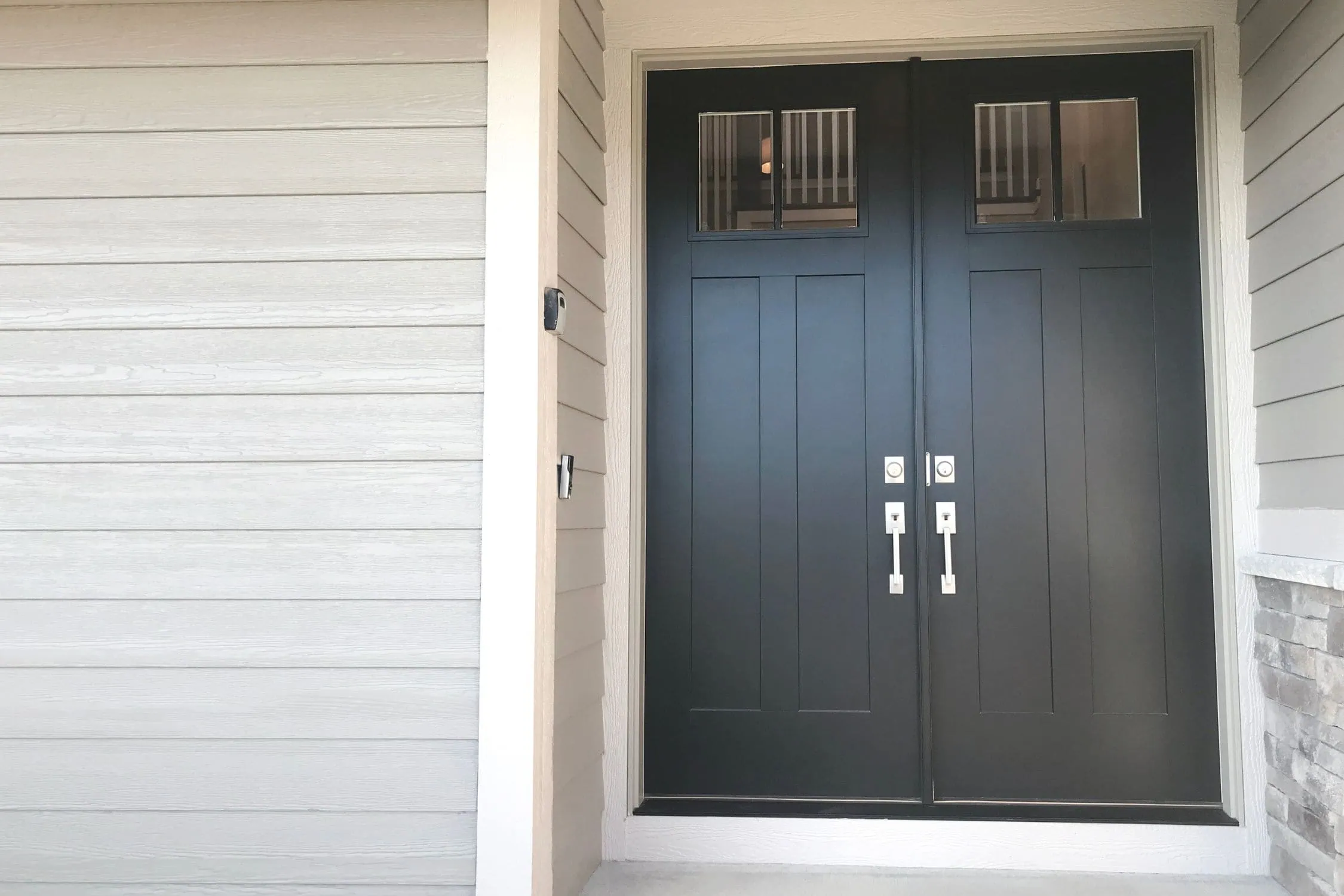
Discover the top trending double door designs of 2026 — from bold pulls to smart locks. Real-world picks that look great and actually work.


Incredible quality work, unbeatable price! Super thrilled about my new windows from "Window Man"! Andrew's crew was professional, courteous, they took their time and paid attention to every detail, inside and outside but still finished the job quickly having replaced 7 windows! It is a pleasure to recommend "Window Man" to anyone who is looking for affordable quality windows.
Great quality of work! Took time to listen our expectations and explain our options! Ordered two doors. Both doors were manufactured in reasonable time and replaced within one day. Highly recommend!
Andrew replaced our front doors with a gorgeous single door and it's perfect. He sat with us when we ordered to make sure all was 100% and we couldn't be more thrilled.
Exceptional Service from Andrew! I recently had the pleasure of working with Andrew for my home window replacement, and I couldn't be more impressed! From the initial consultation to the final installation, Andrew demonstrated exceptional professionalism, expertise, and attention to detail. His courteous and communicative approach made the entire process seamless and stress-free. The new windows have transformed my home's look and feel, and I've already noticed a significant improvement in energy efficiency. Andrew's commitment to quality and customer satisfaction is genuinely unparalleled. I highly recommend him for any window replacement needs. You won't be disappointed!
If you’re looking for quality doors and windows, efficient installation and easy communication, just call Andrew. We had a new door installed in April and the process went so well we had our windows done in July. Highly recommended on all fronts. Thanks, Andrew!
Andrew and the team at Window Man were amazing from the initial consultation to installation. Andrew was professional, reliable, honest and responsive. Also, his prices were unbeatable. No gimmicks, no run-around, just 100% professional and honest service. I totally recommend Window Man and will be using them exclusively on projects moving forward. Thanks for the amazing door and install!
Andrew replaced our front door a few weeks ago and the transformation is incredible! It looks better than we could have imagined since the work was efficiently and professionally done. From start to finish, Andrew made the process easy - he showed us photos of his work which helped us to imagine what to expect, he quickly responded to texts/phone calls, and his quote was the most affordable one we received. We really appreciated his friendliness and honesty (compared to many other businesses who make it clear that they only care about the money). When we needed him to check on something after the installation, Andrew made a trip downtown just to make sure we were happy! Not only have we passed on his number to our admiring neighbours, but we plan to have Window Man come back to do more work in the future! Do not hesitate to get a quote or hire him on the spot...you won't be disappointed. Thanks for updating the look and value of our house Andrew!!!
This was an overall great and easy experience. We are glad that we chose to deal with Andrew. Fast responses, easy to deal with and professional responses (even on a Sunday) made this experience so smooth. We uses them for our front door but will definitely consider them for any window replacements. Prices were fair and workmanship was quick and professional. Full door glass insert.
Andrew is great! I love the new doors! I started my search online and compared some prices and brands. I then searched Kijiji which is where he had an ad that lead me to calling Window Man (Andrew). I wanted to replace existing builder standard doors that came with the house, with full glass so that it would let more light through, plus the doors were not well taken care of by the last owner of the house. Andrew called and came over to show me some options (literally next day, but it was slow season I guess for him in Feb) I checked other vendors, but Andrews prices were way more competitive. Other guys were charging prices for standard doors with full glass and he got me these beautiful things - what an upgrade! He's easy to talk to, straight to the point and even gave me some pro's and con's about getting black aluminum vs standard aluminum for the bottom of the door (standard hides dirt better than black). he also warned me about the challenge of installing smart locks because the smart lock would be uneven for double doors on one side. He did keep me updated during the COVID because the door manufacturer was closed. I wasn't in a rush anyways so win-win Great guy, professional, straight. I would recommend him to my family and friends.


— Anastasia