

I’ve installed a lot of doors over the years — single, double, custom, you name it. Some looked like they belonged on a castle, others made sense for a family of five with strollers and groceries coming through all day.
Double front doors are the showstoppers — but they’re not just about curb appeal. They bring real benefits… and a few headaches if you’re not careful.
Let’s talk about the real pros and cons — beyond the showroom and Pinterest boards — and figure out whether double doors are a smart move for your home.
Key Takeaways
- Double doors offer an undeniable visual impact, better access, and airflow, especially in homes with wider entryways or high ceilings.
- They can increase resale value and complement upscale or traditional architectural styles.
- On the flip side, double doors require more maintenance, are more prone to drafts, and cost more to install and secure.
- Security, sealing, and alignment are all more complex compared to a single door — especially in extreme climates.
- If space is limited, or you're looking for simpler installation and stronger sealing, a single door may be the smarter choice.
- Always assess your wall width, swing clearance, insulation needs, and budget before making the switch.

Grey Doors Double in Windswept Smoke with Port Union 3/4 Wrought Iron Glass Executive Panels
SKU 2124-0185

Exterior Grey Doors Double in Windswept Smoke with Campbellsford Full Wrought Iron Glass with Extended Arch Transom
SKU 2125-0193
The Pros of Double Front Doors
1. Bigger, Brighter Entryway
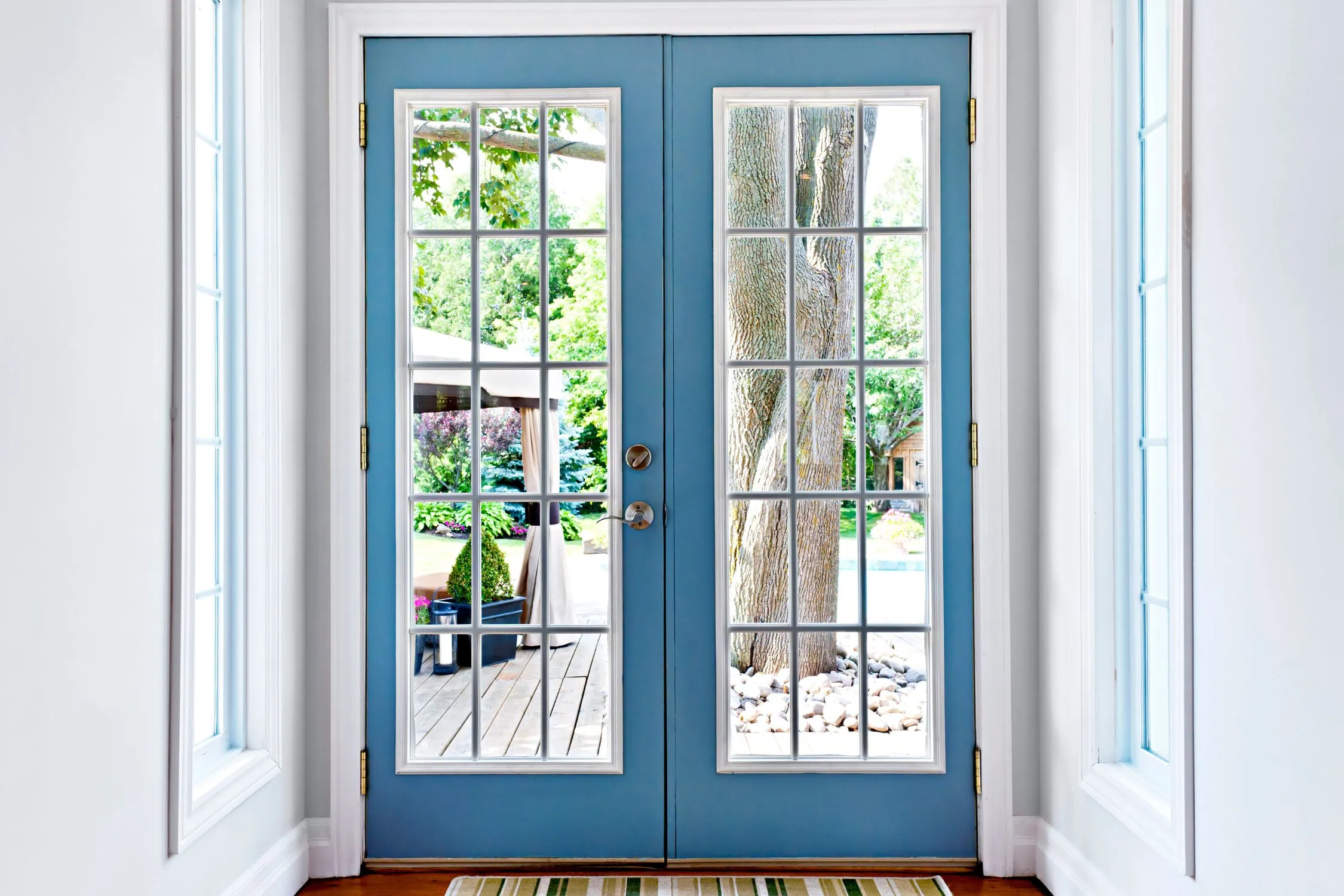
Double doors mean more glass, more light, and more air when both panels swing open. For darker entryways or tight foyers, that extra light can completely change the feel of your space.
Expert tip: If your hallway always feels dim and claustrophobic, glazed double doors can do more than a skylight ever will.
2. Easier Access for… Everything
Moving a couch? Bringing in a fridge? Hosting a dinner party? Double doors make it easy. You’re not fighting a narrow hallway or trying to angle furniture through a 35-inch clear opening.
I’ve had customers literally call me after moving in — “Andrew, we couldn’t get the baby grand piano in without taking the door off.”
3. Striking Visual Impact
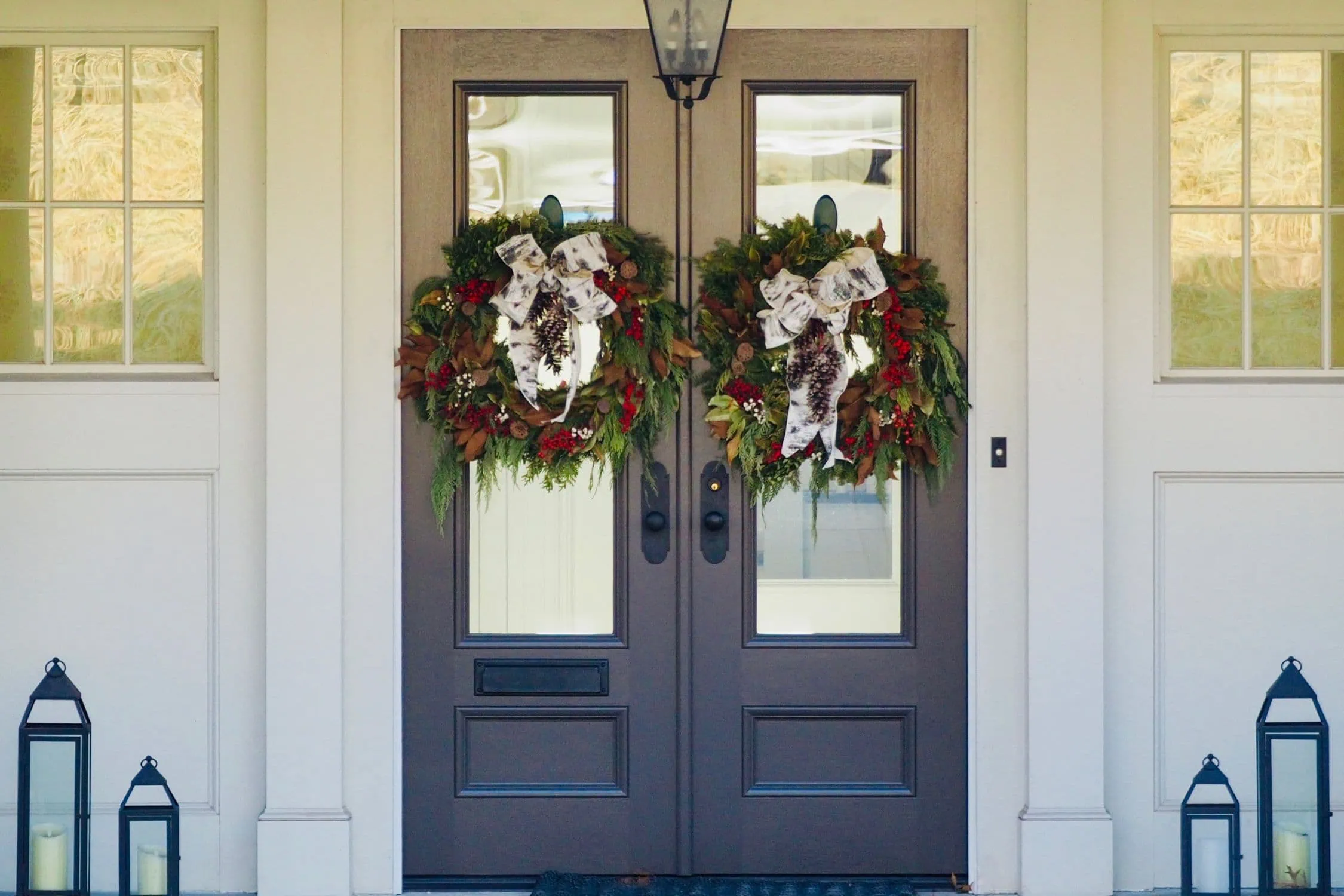
They’re grand. Period. Especially with iron inserts, full glass, or decorative panels — a set of double doors adds presence. If your home has the scale to pull it off, they’ll elevate the entire faсade.
One customer of mine installed a 96” double door with wrought iron. His words? “Feels like I’m walking into a villa, not a duplex.”
4. Ventilation & Airflow
You can open both doors and let air cross through the home. It’s a passive cooling trick that’s especially handy in spring or fall.
Screen inserts or French-style swing doors with integrated blinds can make this even more functional.
If you’re just starting your research, check out our guide: what is a double door? It explains the different types of double door setups, where they’re used, and what makes them work — or not — in different homes.
Let’s talk it through
Styles, colors, installation — I’ll help you get it right
The Cons of Double Front Doors
1. More Maintenance, More Parts
Two doors = two sets of hinges, more weatherstripping, more sealing surfaces. That’s double the spots that can wear, warp, or leak over time.
Insight: Double doors are more prone to drafts than single doors. If they’re not installed perfectly — or if the astragal (centre vertical strip) isn’t tight — you’ll feel it come winter.
2. Security Can Be Tricky
Single doors are easier to lock tight. Double doors need multipoint locks or drop bolts to feel truly secure.
I've seen double doors with only a centre latch. That’s asking for trouble.
Customer feedback: Single door is more stable and secure. Personally, I don't like double doors — a direct quote from a customer who swapped back after one cold season.
3. You Need the Space
This isn’t a small-home upgrade. Double doors demand at least 5 to 6 feet of clear wall space — and that’s before you think about the swing. Without enough clearance, they just don’t work.
On a narrow porch, those beautiful double doors can become a frustration — especially when they slam into planters or benches.
4. Costs Add Up Quickly
Twice the slab, larger hardware, more complex framing — the total cost can be significantly higher than a single pre-hung unit.
And if you’re in an older home, you may need to widen the opening or reinforce the header. That’s more than just a weekend DIY job.
If you’re still unsure, you can compare both options in our detailed double door vs single door guide — it covers style, space, security, and more.
Pros and Cons of Double Front Doors: Quick Summary
|
Feature |
Pros |
Cons |
|
Visual Appeal |
Grand, symmetrical look |
Can overpower smaller façades |
|
Natural Light |
More glazing, brighter entryway |
Less privacy if fully glazed |
|
Accessibility |
Easier for large items, prams, wheelchairs |
Requires wide entry space |
|
Ventilation |
Allows passive airflow |
Needs screens or security inserts |
|
Security |
Can be secure with multipoint locks |
Center seam is a weak point if poorly installed |
|
Weatherproofing |
Can be sealed well if done right |
More prone to drafts; needs perfect alignment |
|
Cost |
Adds value in high-end markets |
Higher initial and installation costs |
|
Maintenance |
Flexible use of one or both doors |
More moving parts to maintain and check |
Is Your Home Right for Double Doors? A Quick Suitability Checklist
Before you fall in love with a photo on Instagram, here’s a simple checklist I give every client:
✅ You have at least 5'–6' of width at your front entry wall
✅ There’s room to swing both doors open (inside or out)
✅ You’re comfortable investing more for curb appeal or resale
✅ You want better furniture, pram, or wheelchair access
✅ Your climate isn’t extreme, or you're investing in good insulation + hardware
Still unsure? Measure your current door. Stand back and look at the faсade. Sometimes a well-placed single door with sidelights gives you all the light, space, and elegance — without the double door fuss.
If you're not set on swing doors just yet, check out our breakdown of sliding door vs double door to see how they stack up in real-world use.

Fiberglass Double Entry Doors With Glass in Commercial Brown with Santa Fe 3/4 Stained Glass Oak Grain
SKU 1124-0407

Entrance Double Doors Fiberglass in Black 3/4 Private Clear Border Glass with Multi Point Lock Oak grain, 8 foot, 96 in
SKU 1124-0107
Pros and Cons of Double Front Doors: What Matters Most
Double front doors aren’t for everyone, but when they work, they really work.
They suit grander homes, open floor plans, and anyone who wants that “wow” effect. But you need to understand the trade-offs — more maintenance, potentially lower energy efficiency, and higher install costs.
If you’re building new, renovating the front, or just want advice — reach out. I’m happy to talk it through. No sales pitch, just straight answers from someone who’s installed hundreds of doors and seen what actually lasts.