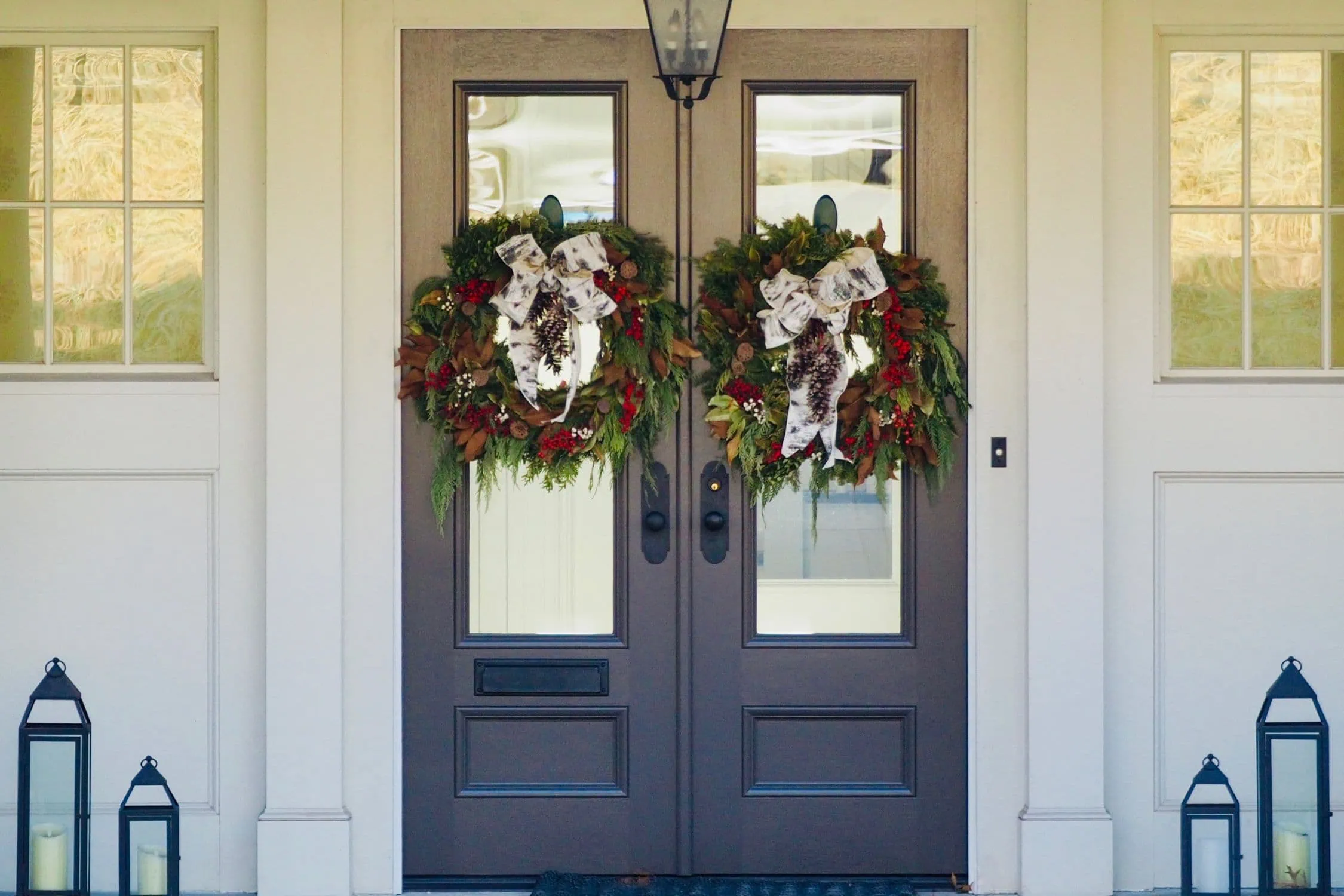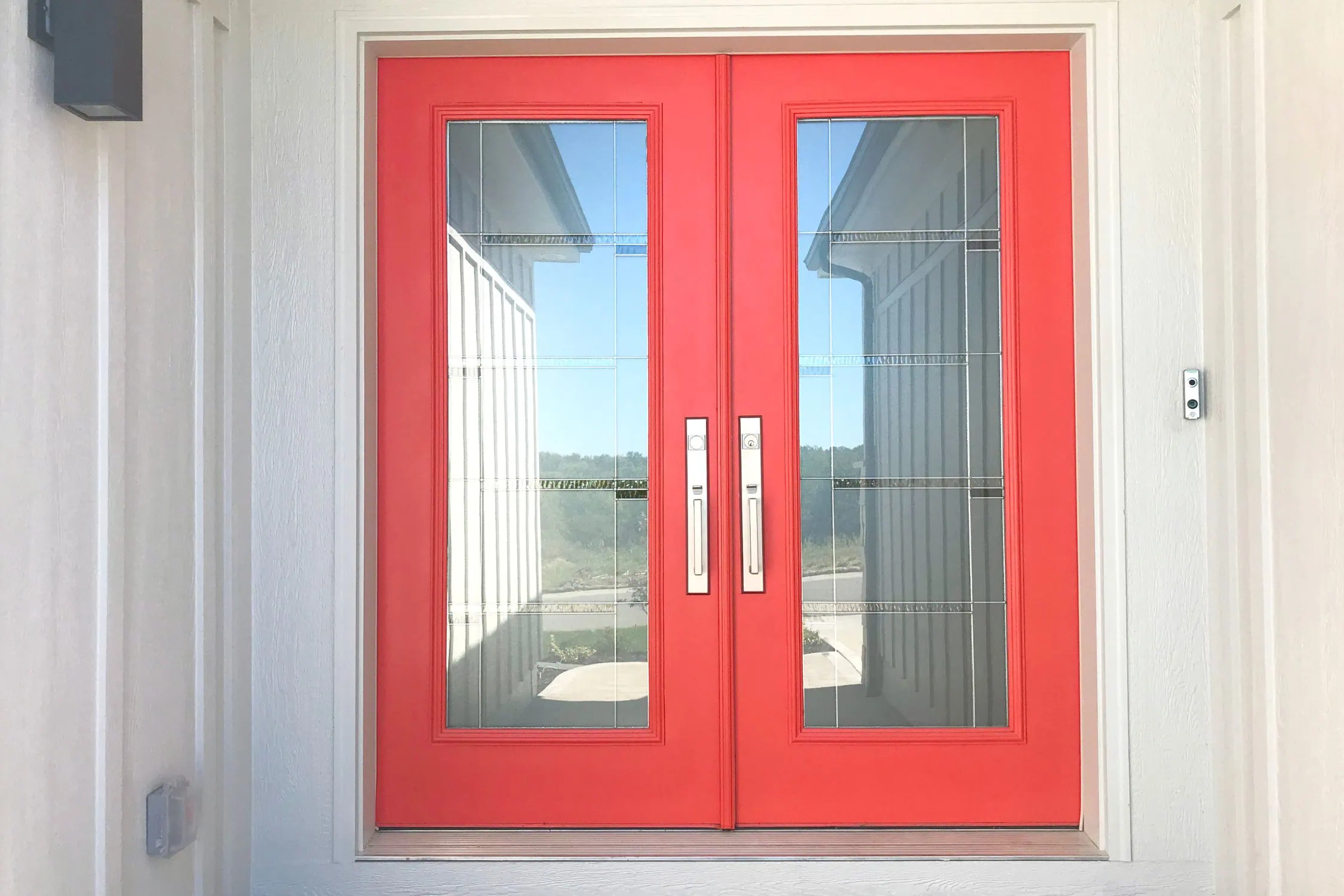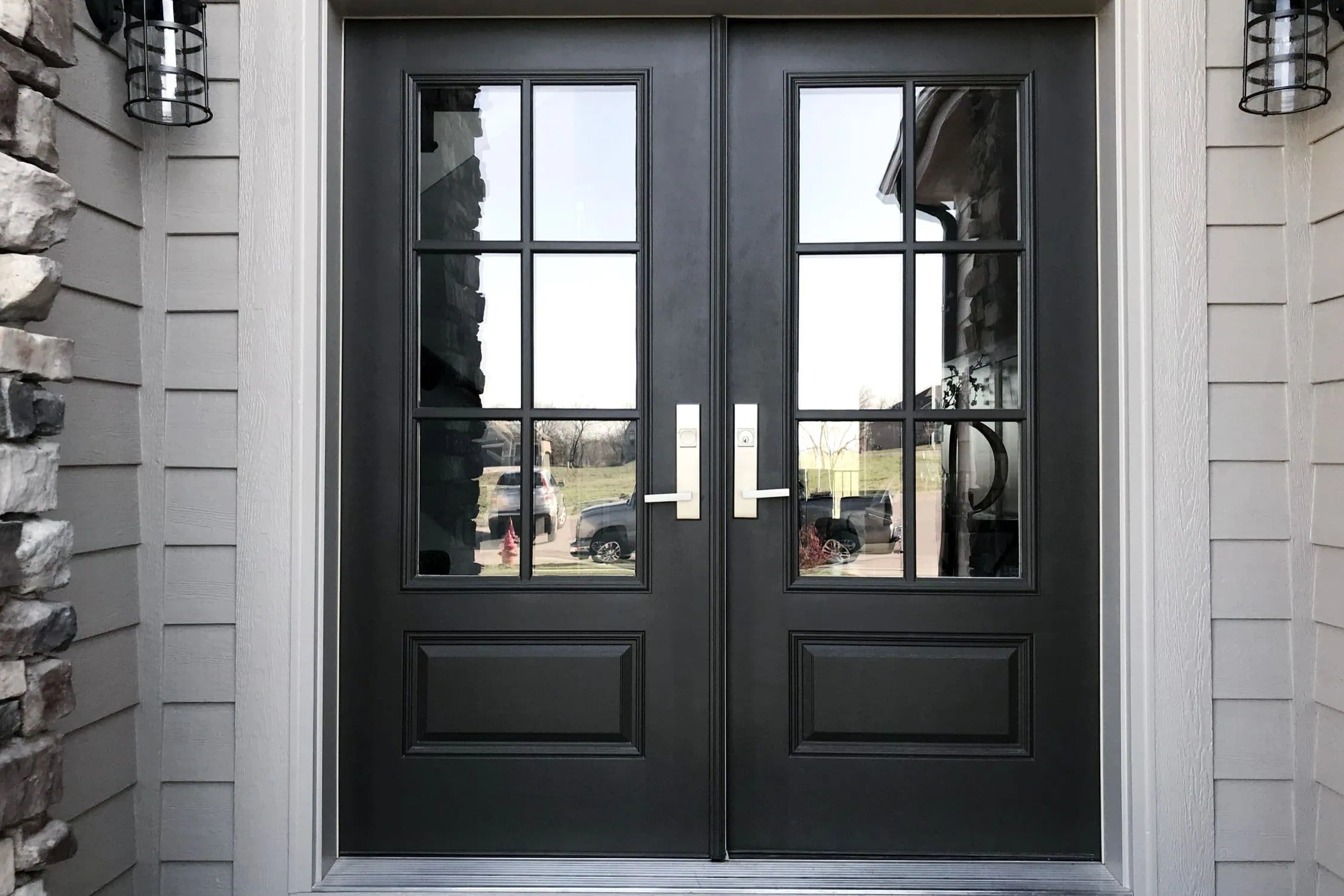


Most people ask this when choosing between a single and a double front door — and it’s a fair question. A door is only as strong as its weakest point, and with double doors, there’s one more seam to think about.
I’ve installed hundreds of both setups. Here’s what actually affects security, what doesn’t, and how to get peace of mind if you’re leaning toward a double door.
Key Takeaways
- Double doors aren’t less secure by default — but they’re harder to secure well.
- Passive doors must be locked top and bottom with strong bolts.
- Multi-point locks and an astragal strip can stop flex and forced entry.
- Poor installation is one of the biggest risks — even on expensive doors.
- Laminated or tempered glass adds protection without losing light.
- Smart locks and alert systems can upgrade security even more.
Are Double Doors Inherently Less Secure Than Single Doors?
Not exactly. A double door isn’t less secure — but it’s more complex to secure properly.
Single doors have one job: seal the opening and lock at one point. Double doors, on the other hand, have to meet in the middle. That seam is what makes people nervous — and rightly so, if it’s poorly installed or uses cheap hardware.
That said, a well-installed double door with upgraded locks and a secure passive panel can be just as solid as a single door.
First time researching? Check our full guide: what is a double door?
What Factors Actually Determine Double Door Security?
Here’s what really makes or breaks security:
- Installation Quality: The #1 cause of door movement, gaps, or flex is poor install — not the door itself.
- The Locking System: Multi-point locks or keyed deadbolts across both doors are essential. A single knob lock won’t cut it.
- Passive Door Reinforcement: The non-operable (passive) door should lock into both the top and bottom with sturdy bolts.
- Frame and Wall Anchoring: If the frame isn’t plumb and anchored well, even the best door will have play.
- Glass Panels: If there’s glass, make sure it’s laminated or tempered. Standard clear panes are easy to break.
Tip: If your door “gives” when you push on it from the outside, it’s not secure enough. That small movement = potential leverage for forced entry.
Locking Systems that Keep Double Doors Secure
The standard knob lock isn’t enough for a double. Here's what I recommend:
|
Lock Type |
Why It Matters |
|
Multi-Point Lock |
Bolts the active door into the frame at 3+ points |
|
Flush Bolts (Passive) |
Secures the second door top and bottom |
|
Astragal Strip |
Covers the seam between doors, adds strength |
|
Smart Lock + Deadbolt |
Adds control, auto-lock, and alerts |
If you're unsure how to make your doors tougher, start with our guide on how to reinforce double front doors using hardware and frame upgrades.
Let’s talk it through
Styles, colors, installation — I’ll help you get it right
Passive Door Security: The Common Weak Point
This is where most double doors fail — the passive door. It’s usually held in place with small pins or flush bolts at the top and bottom. But even when locked, it can flex slightly when pushed, and that slight movement creates vulnerability.
In my personal experience, double doors are just a bit more drafty and “shaky”. The passive panel always has some give — no matter how tight the install.
But if you install proper top/bottom pins, reinforce the astragal, and check alignment every couple of years, it holds up well.
Which Double Doors Are More Vulnerable?
Some styles and materials are more prone to issues:
|
Door Type |
Security Risk |
|
French Doors with Glass |
Lots of glass + weak locks = break-in risk |
|
Cheap Fibreglass Kits |
Thin panels and poor frames |
|
Outswing Double Doors |
Exposed hinges unless they’re security-rated |
|
DIY Installs |
Missed seals, alignment issues |
Tip: If you’re buying a prehung double door kit, check the astragal and passive lock. If it feels flimsy out of the box — it is.
A key part of making double doors more secure is understanding what a double door astragal is and why it matters for sealing and locking.
How to Maximize the Security of Your Double Doors
If you’ve already got a double or just like the look, here’s what I’d do to beef up security:
- Upgrade to a multi-point lock on the active door.
- Add slide bolts or surface bolts to the passive side.
- Install a continuous astragal strip — some even include weather seals.
- Use laminated or double-tempered glass in any panel or sidelight.
- Ensure tight frame install with no play or flex at the seam.
Also, consider a smart lock system that alerts you if the door is unlocked or left ajar. Most good brands now have options that fit double configurations.
Are Double Doors Less Secure? No, But You Have to Get the Details Right
A double door isn’t a problem — unless it’s poorly installed or under-secured. Done right, it gives you wide access, big curb appeal, and peace of mind.
Need professional installation? Send us a photo of your current setup, and we’ll tell you what’s working, what’s risky, and how to tighten it up.