

Double doors don’t usually fail all at once. They leak a little first. A cold draft here. A whistle on windy days. Water showing up after heavy rain. Most homeowners notice it too late — when the damage has already started.
Sealing double doors isn’t just about sticking on new weatherstripping. It’s about how the doors meet, how the passive panel behaves, and whether everything is actually aligned the way it should be. Get that right, and the door feels solid. Get it wrong, and you’ll chase leaks forever.
Key Takeaways
- Air or water leaks? Check your astragal, sweep, and weatherstripping first.
- Always clean and align before sealing — or it won’t last.
- Passive doors often create movement: reinforce them and check the bolts.
- Sealing is DIY-friendly — but alignment issues need pro adjustment.
- Recheck seals yearly. Doors settle and shift more than you’d think.
Why Sealing Double Front Doors Is So Important
If air, water, or light is coming through, your seal is broken — and it’s not just about comfort.
- Energy efficiency: Small leaks add up to big heating or cooling losses.
- Water damage: Even a little water seepage can rot the frame over time.
- Security: A tight seal supports the hardware and adds resistance to prying.
- Noise reduction: Gaps act like an amplifier for outside noise.
- Dust and bugs: Self-explanatory — especially if you're near fields or roads.
People focus on locks and glass, but honestly? A poor seal can do more long-term damage than either of those.
Want the full picture? Read our guide on what a double door is, including types, benefits, and when to install one.

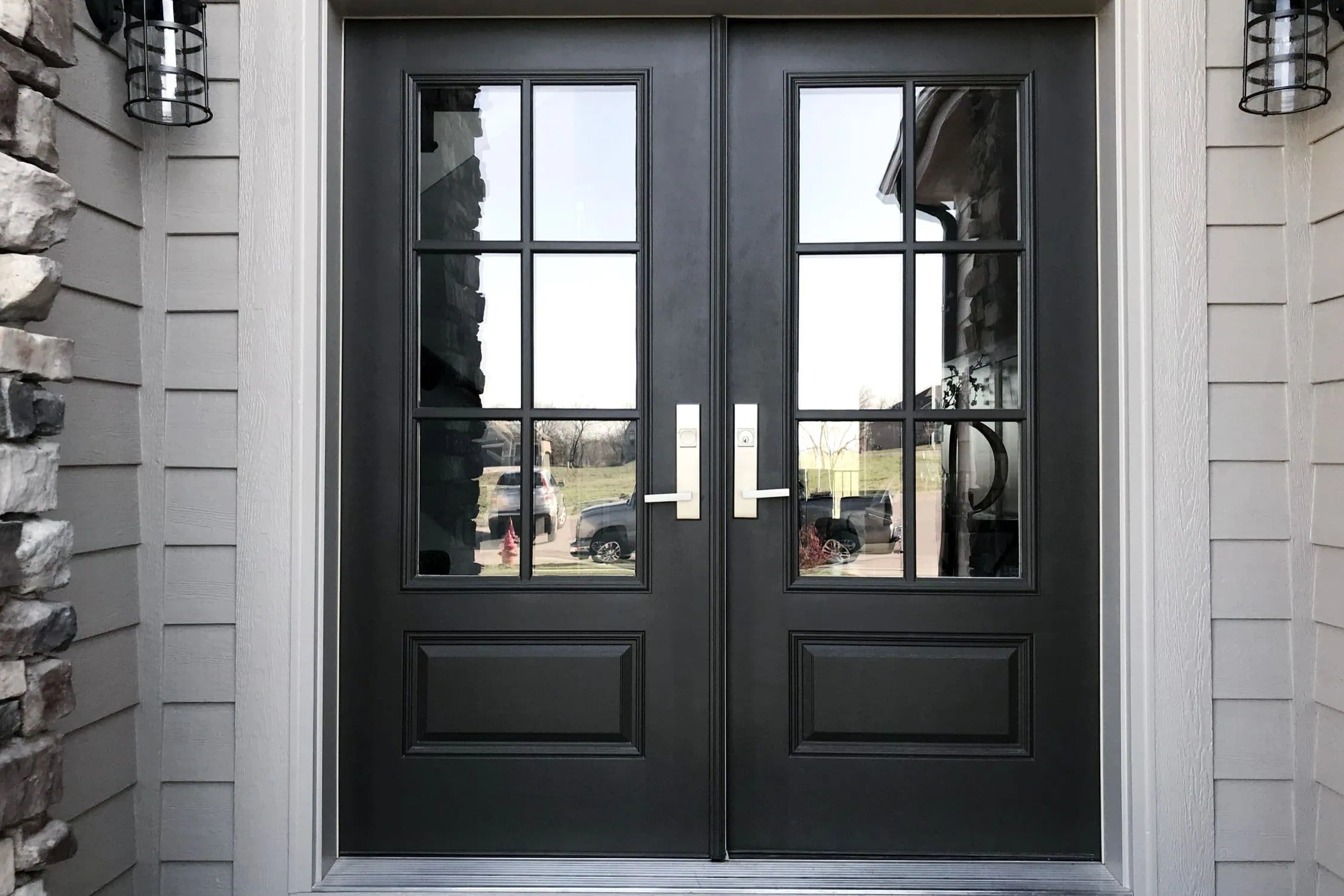
Entrance Double Doors Fiberglass in Black 3/4 Private Clear Border Glass with Multi Point Lock Oak grain, 8 foot, 96 in
SKU 1124-0107

Fiberglass Door With Transom Double in Dark Oak with Three-point Locking System Oak Grain
SKU 1121-0427
Signs Your Double Doors Need Resealing
You don’t need a fancy inspection to spot seal issues. Here’s what to look for:
|
Sign |
What It Means |
|
Light coming through the center |
Gap at the astragal or meeting edge |
|
Cold air or rattling noise |
Failed or missing weatherstripping |
|
Water on the floor inside |
Bottom seal or sweep is worn |
|
Hard to close properly |
Swollen frame or misaligned bolts |
|
Dust build-up inside |
Loose side seals or frame gaps |
Pro tip: If your door “clicks” or flexes slightly when closed, chances are the passive panel isn’t fully flush — and that means air is getting in.
How to Seal Double Doors: Step-by-Step
1. Tackle the Center Gap First (Meeting Edge)
- Astragal Strip: This is the vertical strip that covers the seam. Make sure it’s not cracked or loose. I often replace it with a spring-loaded version for a better seal.
- Foam Backer + Caulk: For visible gaps, push a foam backer rod into the seam, then seal with flexible caulk.
2. Seal the Sides and Top
- Weatherstripping: Use closed-cell foam or rubber strips. Clean the surface first and stick them firmly along the inside edges of the frame.
- Check for symmetry: If one door hits the strip before the other, adjust the hinges — don’t force it.
3. Seal the Bottom
- Door sweep: This attaches to the bottom edge of the active door and brushes against the threshold.
- Threshold seal: Make sure the threshold itself has a compression gasket or sloped edge — not just bare aluminum.
4. Look at the Frame
- Gaps behind the trim? Fill them with low-expansion foam or backer rod.
- Exterior caulking: Re-caulk where the door frame meets the wall, especially at the bottom corners.
Sealing helps with drafts, but how to insulate double doors takes things further for energy savings.
Let’s talk it through
Styles, colors, installation — I’ll help you get it right
How to Seal Double Doors: Recheck Them Yearly
Weather, settling, and even paint layers can throw off the alignment over time. Re-check your seals once a year — especially after winter.
Need professional door installation? Send us a few photos of your doorway — we’ll guide you on what to fix, what to replace, or schedule a proper install.